A real quantum computer vs. your browser · live
Quantum
Miner
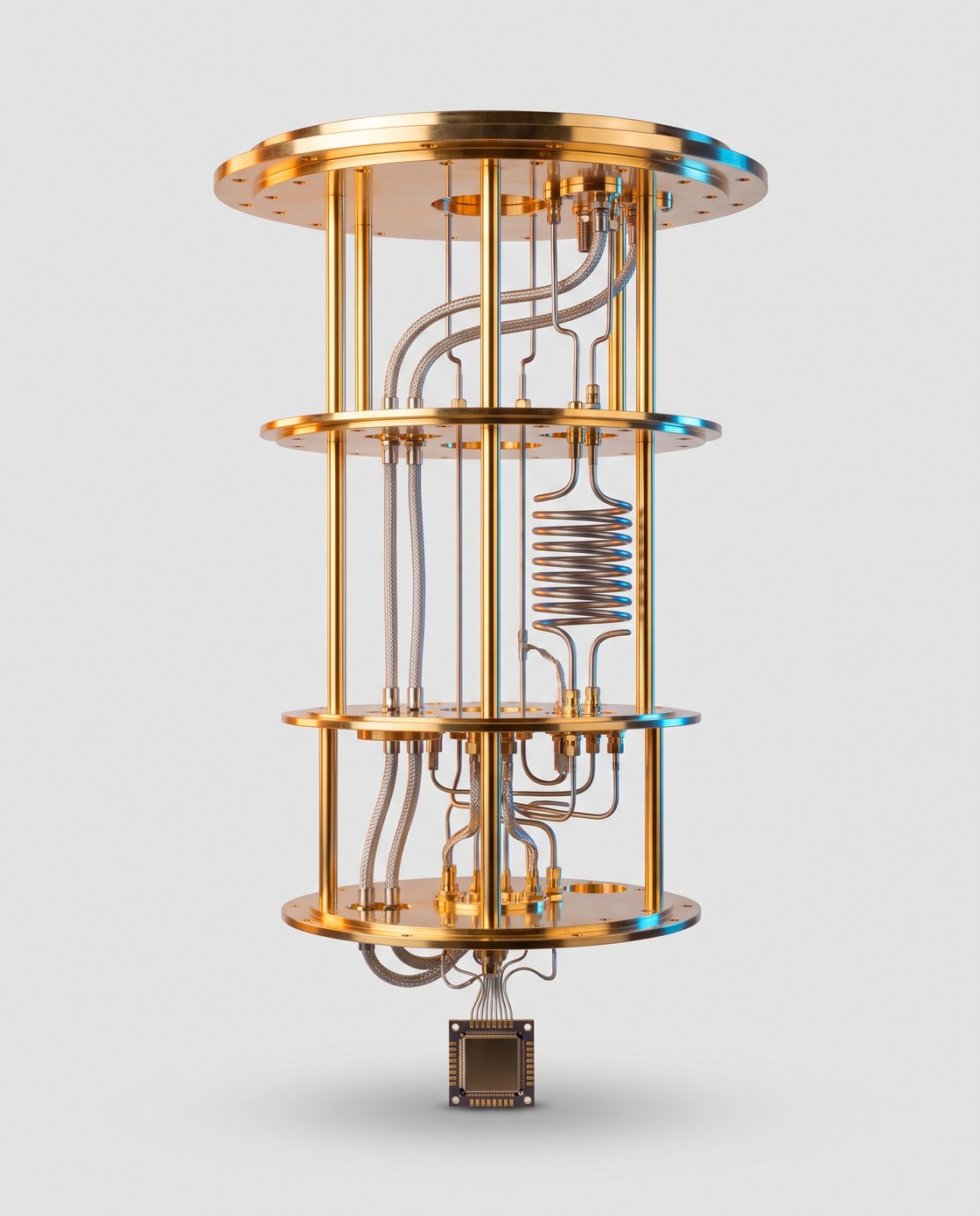
IBM's quantum chip mines tiny blocks in one quantum step. Your browser mines big ones the old way, right now, with nothing to install. One chain. Every block says who found it.
Loading…
last try: —
every block · who found it · how
The chain
| # | When (UTC) | Miner | Size | Nonce | Hash | Tries | Chip signal |
|---|
pick a block
Click a block to see exactly what had to be solved and how it was solved.
step by step · no jargon
How a block gets mined
- 01Mining is a guessing game. Take the last block, add a number (the nonce), run it through a hash. If the result starts with enough zeros, you found the block. No shortcut: guess, check, guess again.
- 02Your browser plays it the normal way. Big 32-bit blocks, hundreds of thousands of guesses per second, difficulty tuned so the crowd finds one every minute or so. Nothing to install: the page is the miner.
- 03The quantum chip plays it the quantum way. We write the same hash as a quantum circuit and hand it to IBM's chip with Grover's algorithm. The chip tries every nonce at once and, in one quantum step, tilts the odds onto the right ones. Then we read it.
- 04The chip's blocks are tiny, on purpose. 3 to 8 bits, because that is what today's hardware can hold before noise wins. Each success makes the next block one bit bigger. Each fumble hands the same block to the humans, who take it in a few tries.
- 05Everything is on the record. Every block says who found it. Every chip job has an IBM job ID, the circuit we sent and the full readout.
straight answers
Questions people ask
Is this a real quantum computer?
Yes. IBM's Heron processors, 156 qubits each. Every chip job in the log has an IBM job ID. We run on the free time IBM gives for research.
Does the chip get told the answer?
No. The circuit contains the hash rule and the target, nothing else. The chip has to run the hash on every nonce inside the circuit. That is the whole point of Grover's algorithm.
Could this mine real Bitcoin?
Not yet. Bitcoin's hash is SHA-256, and running it inside a quantum circuit takes far more qubits than any chip has today. This chain is where you watch that number climb, block by block, on a real machine.
Why can the humans mine bigger blocks than the chip?
Because a browser can run hundreds of thousands of hashes a second on a 32-bit block, while the chip is still learning to hold its qubits steady. The ladder shows exactly how far it gets today, and every success pushes it one bit higher.
Why does the chip's block sometimes point to an older block?
The chip's job waits in IBM's queue, sometimes for hours, while the humans keep mining. We build the chip's block on the chain head at the moment we send the job and attach it when the answer arrives. Every block says which block it was built on.
What is the coin?
QUANTUM MINER is a token on pump.fun. It is how you own a piece of the first chain in the world mined by a real quantum computer, with every block, every chip job and every winner on the public record.
every job on a real chip
Chip log
| When (UTC) | Block size | Chip | Gates | Result | Valid readings | Chip time |
|---|
pick a job
Click a job to see the circuit we sent and the chip's full answer.